KTG Car KTG Car

2026 How to Store Ride On Toys When Not in Use?

Time:2026-09-22 Author:Henry
0%

Ride-on toys bring movement, independence, and plenty of indoor clutter. They also create avoidable storage risks. Learning how to store ride on toys when not in use protects floors, batteries, wheels, and curious children.

The U.S. Consumer Product Safety Commission reported more than 230,000 toy-related emergency-room injuries in 2023. That figure covers many toy types, including riding products. The Toy Association’s safety guidance also emphasizes age suitability, supervision, and regular condition checks. Storage is part of that safety routine, not an afterthought.

Joan Lawrence, former Toy Association safety specialist, says, “Safety starts before play begins.” Her point applies after play, too. A vehicle left beside a staircase can become a tripping hazard. A loose charging cable can invite pulling. A damp garage can quietly damage metal contacts and battery housing.

In my experience, the best approach combines visibility with controlled access. Wipe mud from tires before storage. Remove loose accessories. Charge batteries according to the manufacturer’s instructions. Then keep the toy on a stable rack, inside a dry corner, or beneath a breathable cover. Never block exits or emergency equipment.

The perfect system rarely exists. Real homes have narrow hallways, wet weather, and rushed evenings. That is worth admitting. Still, a simple storage habit can reduce damage and unnecessary risk. This guide explains practical methods for storing ride-on cars, scooters, tractors, and similar toys safely.
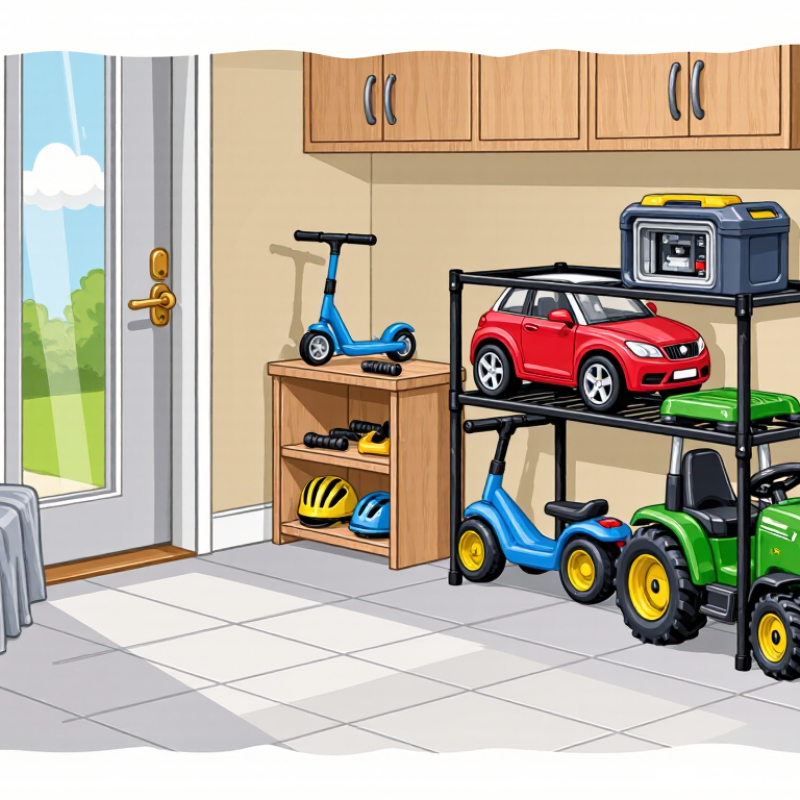
2026 How to Store Ride On Toys When Not in Use?

Identify the Ride-On Type, Battery, and ASTM F963-23 Safety Requirements

2026 How to Store Ride-On Toys When Not in Use?

Identify the ride-on type before storing it. Foot-to-floor and pedal models need a dry, level space with no loose cords. Battery-powered models need closer inspection. Remove the key, switch off power, and keep the charger separate. A garage corner is not automatically safe. Moisture, heat, and falling tools can damage controls or wheels.

Check the battery label. Lead-acid batteries usually need periodic charging, while lithium-ion batteries should remain cool and away from direct sunlight. Follow the supplied charging instructions, and never charge a damaged, swollen, or wet battery. Keep battery terminals covered when possible.

The U.S. Consumer Product Safety Commission’s Toy-Related Injuries report estimated 231,700 toy-related emergency-department injuries among children under 15 in 2023. Storage cannot prevent every injury, but it can remove avoidable hazards.

ASTM F963-23 addresses mechanical and physical risks, electrical and thermal hazards, and battery accessibility. For U.S. sales, it is the current referenced toy-safety framework under federal requirements. Inspect the battery compartment, fasteners, wheels, and seat before storage. The compartment should remain securely closed, with no exposed wiring or loose battery. Keep the toy away from children if parts are missing.

CPSC’s 2023 report also recorded ten toy-related child deaths, a reminder that supervision and condition checks still matter. I have missed small cracks before. That is worth reconsidering. Store the ride-on with wheels blocked if it can roll, and leave its manual nearby for the next battery check.

Clean, Dry, and Inspect Every Component Using CPSC Toy-Safety Guidance

2026 How to Store Ride On Toys When Not in Use?

Clean, Dry, and Inspect Every Component Using CPSC Toy-Safety Guidance

A ride-on toy should be cleaned before storage, not after months of neglect. Wipe plastic surfaces with mild soap and water. Never soak motors, switches, charging ports, or battery compartments. Dry every surface with a clean towel, then leave the toy uncovered until moisture disappears. Damp wheels can collect grit. Damp electrical parts can corrode quietly.

The U.S. Consumer Product Safety Commission’s Toy-Related Deaths and Injuries report recorded about 231,700 emergency-room-treated toy injuries in 2023, involving children under 14. That figure makes routine inspection more than a housekeeping task.

Check wheels, axles, steering joints, pedals, seat restraints, fasteners, and remote controls. Look for sharp edges, loose covers, cracked plastic, exposed wiring, and missing parts. Test the brakes or stopping function gently. Do not rely on appearance alone.

Store the toy indoors, away from rain, direct sunlight, and extreme heat. Follow the product instructions before removing or charging batteries. Keep batteries dry and secure. A sealed battery compartment still deserves inspection. CPSC guidance advises removing damaged toys from use, and that rule should include toys awaiting repair. Do not improvise with tape or mismatched screws. Small fixes can hide larger failures.

I still find storage routines easy to rush. A two-minute check is better than trusting last season’s condition. Source: U.S. CPSC, Toy-Related Deaths and Injuries, 2023.

Prepare 6V/12V Lead-Acid Batteries Fully; Store Lithium-Ion at 40–60%

2026 How to Store Ride On Toys When Not in Use?

Prepare 6V/12V Lead-Acid Batteries Fully; Store Lithium-Ion at 40–60%

Battery storage decides whether a ride-on toy starts next season. For 6V or 12V lead-acid batteries, charge fully before removing the battery. Battery University’s BU-201 technical review notes that lead-acid batteries lose charge during storage and may suffer sulfation when left deeply discharged. A full charge helps, but it is not a cure for neglect.

Lithium-ion batteries need different treatment. Store them at about 40–60% charge, not at 100% or near zero. This range reduces long-term stress, according to Battery University’s BU-808 storage guidance. The U.S. Department of Energy also identifies heat as a major factor in lithium-ion aging. Keep the battery in a cool, dry room, away from direct sunlight and freezing conditions. Remove it from the toy when practical. Check the casing, cables, and charging port for swelling, cracks, or moisture. Stop using damaged batteries.

Tips: Label the battery with its storage date. Recharge lead-acid batteries every 30–60 days, following the charger manual. Check lithium-ion charge every two or three months. Do not guess with an unfamiliar charger. I once stored a battery beside a garage door; temperature changes caused avoidable corrosion. That mistake was small, but expensive. Use a nonconductive surface, keep terminals covered, and store the toy where children cannot operate it. Manufacturer instructions should override general guidance.

Select a Dry, Locked Storage Area Above the 1.2 m Child-Reach Zone

2026 How to Store Ride On Toys When Not in Use?

Choose a dry, locked storage area above the 1.2 m child-reach zone. This height is not a universal safety boundary, but it creates useful separation from toddlers. Keep the ride-on toy behind a closed door, not beside stairs or a window. A garage cabinet, indoor utility room, or raised storage shed shelf can work well. Check the floor after rain. Dampness can reach wheels, wiring, and battery contacts.

The U.S. Consumer Product Safety Commission estimated 145,500 toy-related injuries treated in emergency departments among children under 14 in 2022. That figure appears in its Toy-Related Deaths and Injuries report. Storage cannot remove every hazard, but it can reduce unsupervised access. Remove loose keys, chargers, and small accessories before locking the area. Follow the battery maker’s charging instructions, and never store a damaged or swollen battery. Keep charging equipment away from water and combustible clutter.

I used to focus only on floor space. That was a mistake. A high shelf may protect the toy, but lifting a heavy ride-on vehicle can strain an adult’s back. Use a stable ramp or ask another adult for help. Inspect the latch monthly. Test the lock with one hand. If a child can open it, the storage plan needs revision.

2026 How to Store Ride On Toys When Not in Use? - Select a Dry, Locked Storage Area Above the 1.2 m Child-Reach Zone

Storage area Recommended conditions Child-access control Space and clearance guidance Before storage Inspection interval
Locked indoor utility room Dry, ventilated, and protected from direct sunlight. Keep the floor free from standing water and condensation. Use a locked door or a lockable storage enclosure. Position the lock or release mechanism at least 1.2 m above the floor. Leave enough room to lift the toy without twisting or dropping it. Keep walkways and emergency exits clear. Wipe off dirt and moisture, park securely, and disconnect the charger. Follow the battery maker’s storage instructions. Monthly and after any impact or liquid spill.
Locked garage cabinet Use a dry cabinet away from vehicle exhaust, fuel, paint, solvents, heaters, and other ignition sources. Keep the cabinet locked and place keys or access codes outside the child’s reach. Do not rely on a loose cover alone. Store the ride-on on a stable surface with wheels restrained if the floor slopes. Do not block the garage door or pedestrian route. Clean and dry the vehicle. Check that switches are off and that cables are not pinched or damaged. Monthly, plus a check before every use.
Locked garden shed Use only when the shed is weatherproof, has adequate ventilation, and does not develop persistent dampness or condensation. Fit a functioning door lock. Keep the key inaccessible to children and store the toy away from sharp tools and chemicals. Raise the toy or its storage platform above any area that can flood. Leave clearance around controls, wheels, and charging connections. Remove mud, dry all surfaces, and protect electrical connectors from moisture. Do not charge the toy inside the shed unless the instructions specifically allow it. Every two weeks during wet seasons and before use.
Lockable indoor closet Keep the closet dry and ventilated. Avoid storing the toy beside radiators, hot-water pipes, or other heat sources. Use a lockable door or secured latch that cannot be opened by a child. Do not place heavy items on top of the toy. Store the toy upright only if it is designed to remain stable in that position. Prevent it from falling onto the door or nearby shelves. Remove loose accessories, switch the power off, and keep the charger separately in a dry location. Monthly and after relocation.
Covered outdoor storage area Use only for short-term storage when the area is fully protected from rain, snow, spray, and prolonged direct sunlight. Place the toy behind a locked gate or inside a locked enclosure above the 1.2 m child-reach zone. Keep it on a level, non-slip surface and away from stairs, pools, driveways, and vehicle paths. Use a breathable, weather-resistant cover; do not cover a wet toy. Remove the cover before checking or charging. After every period of bad weather and before every use.
Unsuitable location Avoid damp basements, unprotected balconies, open porches, areas exposed to rain, and locations beside chemicals or heat-producing equipment. Do not leave the toy accessible to children when it is not supervised, even if the power switch is off. Never store it where it can roll into a walkway, doorway, staircase, pool area, or vehicle route. Move the toy to a dry, locked area before cleaning, charging, or maintenance. Relocate immediately.

Safety note: The 1.2 m position is a practical child-reach barrier for storage access; it does not replace a lock. Always follow the specific toy, charger, and battery instructions, and inspect brakes, steering, wheels, fasteners, wiring, and battery housing before use.

Recheck Tires, Wiring, and Chargers Every 30–90 Days Before Reuse

2026 How to Store Ride On Toys When Not in Use?

Recheck Tires, Wiring, and Chargers Every 30–90 Days Before Reuse

Storage is not a “park it and forget it” task. Before parking a ride-on toy, remove dirt and dry the battery area completely. Store it indoors, away from rain, direct sunlight, heaters, and damp concrete. A cool, ventilated space is safer than a sealed plastic box. Keep the vehicle level, with its wheels unloaded when possible.

Every 30 days, inspect the tires for soft spots, cracks, or slow pressure loss. Turn each wheel by hand. It should rotate smoothly, without grinding. Check wiring for crushed insulation, loose terminals, green corrosion, or melted plastic. Replace damaged parts through qualified service support. Do not test questionable wiring with repeated charging.

Examine the charger cable and plug every 30–90 days. Look for cuts, bent pins, discoloration, or unusual heat after charging begins. Use only the charger specified for the toy, and place it on a hard, nonflammable surface while charging. The U.S. Consumer Product Safety Commission reported about 231,000 toy-related emergency-department injuries among children in 2023. That figure is not storage-specific, but it shows why a pre-use inspection matters. CPSC safety guidance also emphasizes following manufacturer instructions and removing damaged products from use.

I sometimes find owners check the battery but ignore the tires. That mistake is easy to make. Before a child rides again, confirm steering, brakes, fasteners, and remote controls in a clear area. A short test is worth the extra minute.

2026 Storage Check Schedule for Ride-On Toys

Check tire condition and pressure every 30 days, inspect wiring every 90 days, and examine the charger every 30 days. Always inspect the charger and perform a complete safety check before reuse.

The chart shows the recommended maximum interval between storage inspections. Shorten the interval when the toy is stored in damp, dusty, hot, or freezing conditions.

FAQS

How should I store a foot-to-floor or pedal ride-on toy?

Place it on a dry, level surface without loose cords nearby. Keep it away from stairs, windows, and damp floors. Block the wheels if it can roll. Keep it dry.

What should I do before storing a battery-powered ride-on toy?

Remove the key and switch off the power. Keep the charger separate from the toy. Inspect the wheels, seat, fasteners, wiring, and battery compartment. Small cracks matter.

How should I store a lead-acid battery?

Fully charge a 6V or 12V lead-acid battery before storage. Recharge it every 30 to 60 days, following the charger instructions. Keep its terminals covered when possible. Do not leave it deeply discharged.

What charge level suits a lithium-ion battery during storage?

Store a lithium-ion battery at about 40–60% charge. Keep it in a cool, dry room away from sunlight and freezing temperatures. Check its charge every two or three months. Not fully charged.

Can I store a damaged or swollen battery?

No. Do not charge or store a damaged, swollen, cracked, or wet battery. Stop using it and follow applicable local disposal guidance. Keep damaged batteries away from children, water, and combustible materials. Do not guess.

Where is the safest storage area?

Use a dry, locked room or cabinet above the 1.2-meter child-reach zone. A garage corner is not automatically safe. Avoid falling tools, heat, moisture, and clutter. Check after rain.

What safety checks should I complete before storage?

Confirm that the battery compartment closes securely. Look for exposed wiring, loose batteries, missing parts, and worn wheels. Current toy-safety requirements address mechanical, electrical, thermal, and battery-access risks. Missing parts matter.

How can I improve a storage plan that seems safe?

Test the lock with one hand and inspect it monthly. If a child can open it, change the plan. Do not lift a heavy ride-on alone; use help or a stable ramp. I once missed a small crack.

Conclusion

Learning how to store ride on toys when not in use starts with identifying the toy type, battery system, and relevant ASTM F963-23 safety considerations. Before storage, clean every surface, remove dirt and moisture, and inspect the body, wheels, controls, wiring, battery compartment, and charger for damage. For toys using 6V or 12V lead-acid batteries, charge them fully and follow the manufacturer’s maintenance instructions. Lithium-ion batteries should generally be stored at approximately 40–60% charge rather than completely full or empty.

Choose a dry, cool, well-ventilated, and locked storage area, keeping the toy and its accessories above the 1.2-meter child-reach zone. Protect the toy from direct sunlight, extreme temperatures, humidity, and accidental contact with water. Every 30–90 days, recheck the tires, wiring, battery condition, and charger before use. If any component is cracked, swollen, corroded, or loose, do not operate the toy until it has been properly assessed and repaired.

Henry

Henry

Henry is a dedicated marketing professional with a profound expertise in the company's offerings. With years of experience in the industry, he possesses an impressive understanding of the market dynamics and consumer behaviors that drive success. Henry is committed to sharing his insights through......