KTG Car
Choosing the right materials for a kids’ ride-on vehicle is not only about bright colors or a polished finish. Parents need to consider strength, comfort, heat resistance, cleanability, and long-term wear. The answer to “what materials are best for kids ride on vehicles” depends on how the vehicle will be used, stored, and maintained.
Dr. Benjamin Hoffman, a pediatrician and child-safety researcher, has said, “Good design reduces risk before a child ever begins to ride.” That principle applies directly to material selection. High-impact polypropylene or reinforced ABS plastic can create a durable outer body without adding excessive weight. Steel frames may improve stability, but they can also increase weight and create sharper damage points after collisions. Soft EVA foam tires offer quieter movement on indoor floors, while rubber tires usually provide stronger outdoor traction. Neither option is perfect.
Small details matter. Rounded plastic edges should feel smooth beneath a parent’s hand. Seat surfaces should resist cracking after sunlight exposure. Battery compartments need firm covers, not loose panels that children can easily lift. Non-toxic, low-odor materials are preferable, especially when young children touch the steering wheel repeatedly.
Still, material quality does not guarantee safety. A sturdy vehicle can become unstable on a steep driveway. A soft seat cannot correct poor supervision. This is where product testing, age guidance, and regular inspection become essential. Buyers should check for loose fasteners, brittle plastic, exposed wiring, and worn tires before every few rides. The best material is useful only when the entire vehicle is thoughtfully designed and responsibly maintained.
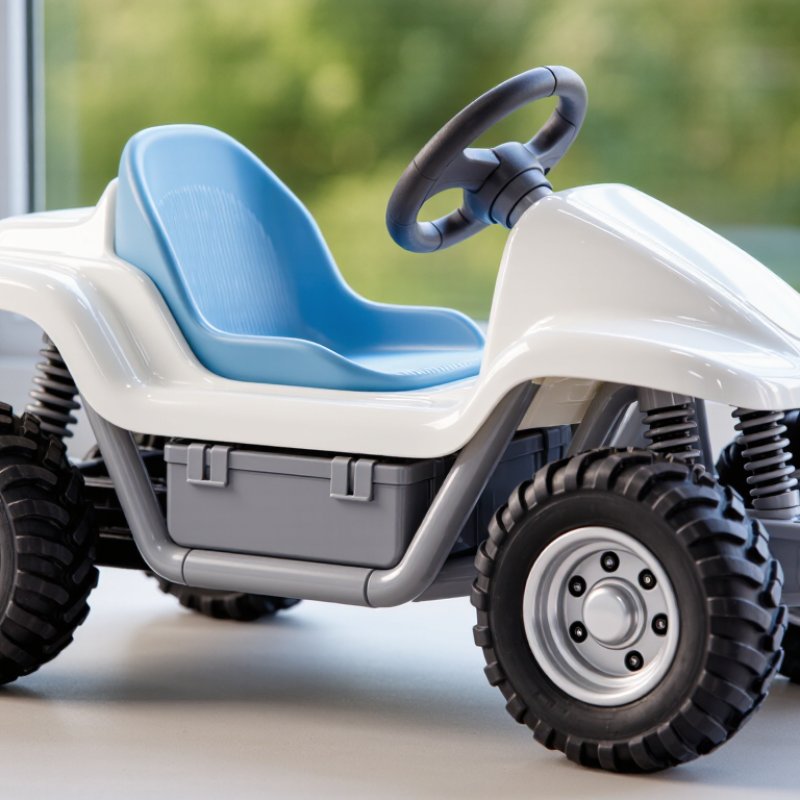
What Are the Best Materials for Kids Ride On Vehicles?
Safe kids’ ride-on vehicles need materials that resist impact, heat, moisture, and repeated use. High-density polyethylene and reinforced polypropylene work well for body panels because they are lightweight and less likely to splinter after minor collisions. Rounded edges matter too. A strong shell still needs careful molding.
For the frame, powder-coated steel or reinforced aluminum can provide useful strength. Steel usually handles heavier loads, while aluminum reduces overall weight and corrosion risk. However, metal parts should have smooth welds and protected joints. Exposed rust or sharp seams can turn a small defect into a safety concern. No material is perfect.
Soft rubber or thermoplastic rubber suits wheels because it improves grip on indoor floors and compact outdoor surfaces. The tires should remain firm without becoming brittle in sunlight. Seats benefit from closed-cell foam and durable, non-toxic coverings that can be wiped clean. Open seams may collect moisture and dirt.
Battery compartments deserve special attention. A flame-resistant enclosure, secure wiring, and a well-fitting cover help prevent accidental contact and damage. Materials should also be checked through documented safety testing, age guidance, and load assessments. In practice, I would inspect screws, hinges, and wheel connections before judging the vehicle’s main materials. Small details matter. A colorful coating means little if it flakes easily or hides weak plastic underneath. Manufacturers should also disclose material information clearly, although this is not always done well.
What Are the Best Materials for Kids Ride On Vehicles?
How Plastic, Metal, and Composite Frames Affect Durability
A ride-on vehicle’s frame controls its strength, weight, and long-term stability. Plastic frames are lightweight and naturally resist rust. They also handle small bumps without sharp dents. However, thin plastic can become brittle after years of sunlight and cold weather. Check the frame thickness around the seat, wheels, and battery compartment.
Metal frames usually provide stronger support for heavier children and frequent outdoor use. Steel feels solid under pressure, but it can rust when paint chips expose the surface. Aluminum resists corrosion and weighs less, though it may bend more easily under impact. In practical inspections, welded joints and reinforced corners matter as much as the metal itself. A strong material cannot rescue a poorly designed connection.
Composite frames combine materials, often using plastic reinforced with fibers. They can reduce weight while improving stiffness. Their performance depends heavily on manufacturing quality and the bonding between layers. Damage may hide beneath a smooth surface. I once assumed a heavier frame was always safer, but that is too simple. Weight can improve stability, yet it may make carrying and controlled handling difficult. Families should examine the frame, fasteners, wheel mounts, and weather exposure together. A durable vehicle needs balanced construction, not merely a thick shell.
Tensile strength indicates how much pulling force a material can withstand before breaking. The ranges shown are representative values for commonly used material types: polypropylene plastic, low-carbon steel, and glass-fiber-reinforced polymer composites. Actual durability also depends on frame design, wall thickness, joints, impact loading, UV exposure, moisture, and manufacturing quality. Steel generally provides high strength, while composites can offer a strong balance between strength and weight.
For kids’ ride-on vehicles, material choice starts with the seat, wheels, and handles. The U.S. Consumer Product Safety Commission reported about 231,900 toy-related emergency-room injuries in 2023. That figure makes everyday contact points worth careful inspection. Seats should use firm, well-stitched, non-toxic plastic or tightly bonded foam. The surface should resist cracking, peeling, and heat buildup. Soft padding feels comfortable, but loose foam can absorb moisture and become difficult to clean.
Wheels need more than attractive appearance. High-density rubber or durable thermoplastic can improve grip on smooth floors and reduce sudden sliding. The ASTM F963 toy safety standard addresses mechanical hazards, sharp edges, and material safety, but compliance does not replace regular checks. I would press each wheel, inspect the axle area, and watch for small cracks after outdoor use. A wheel can look fine and still wobble.
Handles deserve equal attention. Choose rounded, impact-resistant materials with a textured grip that remains secure when hands are damp. Avoid exposed metal edges, brittle plastic, and coatings that flake under fingernails. The European Chemicals Agency’s restriction work on phthalates shows why flexible plastics require careful material control. “Non-toxic” sounds reassuring, but it is not a complete specification. Ask for test documentation when available, and remember that children may chew handles despite every warning. That detail is easy to overlook.
What Are the Best Materials for Kids Ride On Vehicles?
Battery quality shapes both performance and safety. Lead-acid batteries remain affordable and tolerate simple charging systems. Lithium-ion packs are lighter, but they need stronger monitoring and thermal protection. The IEA’s Global EV Outlook 2024 reported that global electric-vehicle battery demand exceeded 750 GWh in 2023. That scale shows rapid progress, but smaller ride-on vehicles still need careful design. Bigger capacity is not automatically safer.
Wiring deserves equal attention. Use flexible, heat-resistant insulation and secure connectors that cannot loosen during vibration. A correctly rated fuse should sit close to the battery. It limits damage when wires short against a metal frame. Thin wires may heat quickly, even when the vehicle moves slowly. CPSC’s 2023 toy-injury report estimated 217,000 toy-related emergency-department injuries in the United States. That figure includes many non-electrical incidents, but it reinforces the need for complete protection.
Protective components should include a sealed battery compartment, strain relief, guarded terminals, and a charger with automatic shutoff. Battery packs should not move inside the vehicle. Movement can damage insulation over time. Rechargeable cells should follow recognized testing practices, including relevant IEC 62133-2 guidance. ASTM F963-23 also addresses battery access and toy safety requirements. In practical inspections, small details often fail first. A connector may look secure but loosen after repeated use. I would also avoid treating a larger fuse as a cure. The design still needs proper wire sizing, ventilation, and supervised charging.
For toddlers, thick HDPE or ABS plastic is usually the practical choice. It has rounded edges, resists small impacts, and needs little maintenance. However, plastic can become brittle after years of strong sunlight. The U.S. Consumer Product Safety Commission estimated 231,000 toy-related emergency-room injuries in 2023. That figure covers all toys, not only ride-on vehicles, but it shows why stable construction matters.
Age changes the material decision. Children aged one to three need wide plastic bodies, low seating, and soft rubber wheels. Older children may benefit from a steel frame with an aluminum handle or axle. Steel offers strength, yet it can rust when scratches expose bare metal. Aluminum resists corrosion better, but it may bend under rough use. ASTM F963-23 includes mechanical and physical safety requirements for toys, so responsible buyers should check test documentation, not only appearance.
Weather also changes maintenance needs. In wet climates, sealed plastic and corrosion-resistant fasteners reduce cleaning work. In hot climates, store the vehicle under shade; black plastic can become uncomfortably hot. Rubber tires grip well on smooth patios, but they collect grit on gravel. Wipe wheels monthly and inspect cracks before every ride. I have seen attractive vehicles fail because water stayed inside metal joints. No material wins every test. Some cheaper plastic parts also feel acceptable at first, then show stress whitening after repeated impacts. That weakness is easy to miss.
| Material | Common Vehicle Components | Best-Suited Age Range | Typical Uses | Weather and Outdoor Performance | Durability and Safety Characteristics | Maintenance Needs | Main Advantages | Limitations | Overall Suitability |
|---|---|---|---|---|---|---|---|---|---|
| High-Density Polyethylene (HDPE) | Vehicle body, fenders, panels, molded seats | Approximately 1.5–8 years, depending on vehicle size and design | Push cars, pedal vehicles, and low-speed battery-powered ride-ons | Good resistance to moisture, mild rain, and outdoor humidity. Prolonged sunlight can cause fading and surface aging unless UV-stabilized. | Impact-resistant and slightly flexible, which helps reduce cracking during ordinary play. It does not rust and has no sharp corrosion flakes. | Wipe with mild soap and water. Dry after wet use and store out of direct sunlight when possible. Check for cracks and loose fasteners. | Lightweight, weather-resistant, easy to clean, and widely suitable for molded vehicle shells | Can fade or become brittle after long-term ultraviolet exposure. Deep scratches may be difficult to repair invisibly. | Excellent for bodies and exterior panels |
| Polypropylene (PP) | Body panels, seats, dashboards, storage compartments, wheel components | Approximately 2–10 years, depending on size and supervision requirements | Indoor and outdoor ride-ons requiring low weight and moderate flexibility | Handles water well and does not absorb moisture. UV performance varies; outdoor models should use UV-stabilized grades. | Low density and good fatigue resistance. It may deform under high heat or crack more easily than HDPE in cold conditions. | Clean with a soft cloth and mild detergent. Avoid strong solvents and prolonged storage in very hot locations. | Lightweight, moisture-resistant, economical, and easy to mold into complex shapes | Lower stiffness than some alternatives and less reliable in very cold or intensely sunny conditions without additives. | Very good for lightweight components |
| Acrylonitrile Butadiene Styrene (ABS) | Rigid dashboards, trim, control housings, decorative panels | Approximately 3–10 years, with adult supervision for powered controls | Indoor use and protected outdoor areas where a rigid, finished appearance is important | Good moisture resistance, but standard ABS can discolor and lose toughness under prolonged sunlight. Outdoor-rated formulations perform better. | Rigid and impact-resistant at moderate temperatures. It can become more brittle in cold weather or after extended UV exposure. | Use mild soap, water, and a soft cloth. Avoid abrasive cleaners, solvents, and high-pressure washing. | Smooth appearance, good dimensional stability, and clean detail reproduction | Not the best choice for continuously exposed exterior shells unless UV protection is included. | Good for trim and protected components |
| Powder-Coated Steel | Chassis, axles, brackets, steering supports, seat frames | Approximately 3–12 years, depending on vehicle size and operating speed | Heavier ride-ons, pedal vehicles, and structures needing high stiffness | Strong outdoors when the coating remains intact. Exposed cut edges, welds, and scratches can develop rust in wet or salty environments. | High stiffness and load-bearing strength. A damaged coating can allow corrosion, especially near fasteners and joints. | Inspect for chipped paint, rust, loose bolts, and bent parts. Dry after wet use and touch up damaged coating with a suitable protective product. | Strong, rigid, and resistant to bending under normal loads | Heavier than plastic or aluminum and vulnerable to corrosion if the protective finish is damaged. | Excellent for frames and structural parts |
| Aluminum | Lightweight frames, axle supports, pedals, structural brackets | Approximately 4–12 years, depending on design and load rating | Portable ride-ons and vehicles where low weight and corrosion resistance are priorities | Very good resistance to rain and humidity. Salt exposure can cause surface corrosion, although it does not form red rust like steel. | Good strength-to-weight ratio and naturally corrosion-resistant surface. It can bend or dent more easily than steel under severe impact. | Rinse off salt or mud, dry joints, and inspect for bending, cracks, and loose connections. Do not use harsh alkaline cleaners. | Lightweight, durable, and better suited to damp environments than uncoated steel | Usually more expensive and less resistant to severe bending or concentrated impact than steel. | Very good for lightweight structural parts |
| EVA Foam | Quiet wheels, tire bands, bumpers, footrests, soft grip surfaces | Approximately 1.5–8 years, depending on wheel size and surface conditions | Indoor floors, smooth pavements, and low-noise household use | Resists water absorption, but prolonged sunlight, heat, and rough wet surfaces can accelerate wear and surface breakdown. | Soft, quiet, and gentle on floors. It can wear flat or tear when used on gravel, sharp edges, or coarse asphalt. | Remove grit regularly, wipe clean, and inspect for flat spots, cracks, and missing sections. Avoid petroleum-based cleaners. | Quiet operation, good floor protection, and comfortable cushioning | Shorter service life on rough outdoor surfaces and limited traction in some wet conditions. | Excellent indoors; fair outdoors |
| Solid Rubber | Wheels, tires, bumpers, grips, anti-slip components | Approximately 2–12 years, depending on compound and use | Outdoor wheels and surfaces requiring grip and abrasion resistance | Performs well in rain and on many outdoor surfaces. Sunlight, ozone, oils, and extreme temperatures can eventually harden or crack some rubber compounds. | Good traction and abrasion resistance. Softer compounds provide grip but wear faster; harder compounds last longer but may transmit more vibration. | Clean with mild soap and water. Keep away from oils and solvents, and check for cracks, embedded stones, and uneven wear. | Good traction, shock absorption, and outdoor versatility | Can become worn, hardened, or cracked over time; replacement parts may be needed for heavily used wheels. | Excellent for outdoor wheels |
| Thermoplastic Rubber (TPR) | Flexible tires, grips, bumpers, seals, soft-touch trim | Approximately 2–10 years, depending on formulation and exposure | Ride-ons needing a balance of flexibility, grip, and easy manufacturing | Good moisture resistance. UV, heat, and cold performance depend strongly on the specific formulation and stabilizers. | Flexible and relatively quiet, with good grip on smooth surfaces. It may permanently deform under long-term compression or high heat. | Wash with mild detergent, remove debris from tread patterns, and store away from direct heat and sunlight. | Comfortable grip, low noise, flexibility, and good appearance | Performance varies significantly by formulation; not all TPR products are equally suitable for intense outdoor use. | Very good for grips and moderate-use tires |
| Stainless Steel | Fasteners, axles, small brackets, exposed hardware | Approximately 3–12 years, depending on grade and maintenance | Vehicles used in humid climates or areas where corrosion-resistant hardware is valuable | Excellent resistance to rain and humidity. Chloride-rich environments, such as coastal areas, can still cause staining or localized corrosion in unsuitable grades. | Strong and corrosion-resistant, although it is heavier and more expensive than many alternatives. | Rinse away salt and dirt, dry thoroughly, and check threads and joints for loosening. Avoid steel-wool cleaning that can leave contaminating particles. | Long service life, strong hardware, and excellent resistance to ordinary moisture | Higher material cost and weight; not usually necessary for every component. | Excellent for selected hardware |
Plastic frames are light and resist rust. They handle small bumps without sharp dents. Thin plastic can become brittle in sunlight and cold weather. Check thickness near the seat, wheels, and battery compartment.
Usually, metal provides stronger support for heavier children and frequent outdoor use. Steel feels solid but may rust after paint chips. Aluminum resists corrosion but can bend during hard impacts. Strong material cannot fix weak joints.
Composite frames can reduce weight while improving stiffness. Their quality depends on bonding and manufacturing. Damage may hide under a smooth surface. Do not judge safety by weight alone.
Examine welds, corners, fasteners, and wheel mounts. Look for cracks, movement, sharp edges, or loose connections. A heavier frame may improve stability. It can also become difficult to carry.
Choose firm, non-toxic plastic or tightly bonded foam. The surface should resist cracking, peeling, and heat buildup. Loose foam may absorb moisture. That becomes unpleasant quickly.
Durable rubber or thermoplastic can improve grip on smooth floors. Press each wheel and check for wobbling. Inspect the axle area after outdoor use. A wheel can look normal but still fail.
Handles should have rounded edges and impact-resistant construction. Textured grips help when children’s hands are damp. Avoid exposed metal and brittle plastic. Children may chew handles despite warnings.
Use heat-resistant insulation and secure connectors. Place a correctly rated fuse near the battery. Protect terminals with covers and seal the battery compartment. Thin wires can heat quickly.
No. Bigger capacity is not automatically safer. The vehicle still needs suitable wiring, ventilation, and monitoring. A larger fuse cannot repair poor design. I used to assume more power meant better protection.
Use a charger with automatic shutoff and supervise charging. Keep the battery firmly secured inside its compartment. Repeated movement can damage insulation. Small connectors often loosen first, though this is easy to miss.
Choosing the right materials is essential for creating safe, durable, and enjoyable kids’ ride-on vehicles. The best options should be strong, non-toxic, weather-resistant, and designed with smooth edges and secure connections. Plastic frames are lightweight and easy to maintain, while metal frames offer greater strength and stability. Composite materials can provide a practical balance between durability and reduced weight. Seats, wheels, and handles should use comfortable, impact-resistant materials that support grip, balance, and safe movement.
The question of what materials are best for kids ride on vehicles also depends on age, riding environment, frequency of use, and maintenance needs. Younger children may benefit from lightweight designs with soft seating and wide, stable wheels, while older children may need stronger frames and reinforced components. Batteries, wiring, and protective covers should be securely enclosed and resistant to heat, moisture, and everyday wear. Selecting suitable materials helps improve safety, extend product life, and reduce maintenance over time.
