 KTG Car
KTG Car
KTG Car
Assembling ride-on toys can be a daunting task for many parents. However, mastering this skill is crucial for a fun and safe play experience. According to industry expert Dr. Lisa Hart, “Understanding how to assemble ride on toys easily saves time and frustration.” This wisdom underscores the importance of effective assembly techniques.
When you embark on the journey of putting together these toys, it’s easy to overlook small details. Missing screws or unclear instructions can lead to a frustrating experience. A practical approach to this task can transform assembly from a chore into a satisfying accomplishment. With the right tips, you can simplify the process greatly.
Recognizing common pitfalls will also help. Many parents find themselves confused by overly complicated manuals or unclear diagrams. It’s vital to focus on clarity. By learning how to assemble ride on toys easily, you ensure safety and longevity for the toy. This not only enhances the playtime experience but also fosters a sense of achievement for both you and your child.
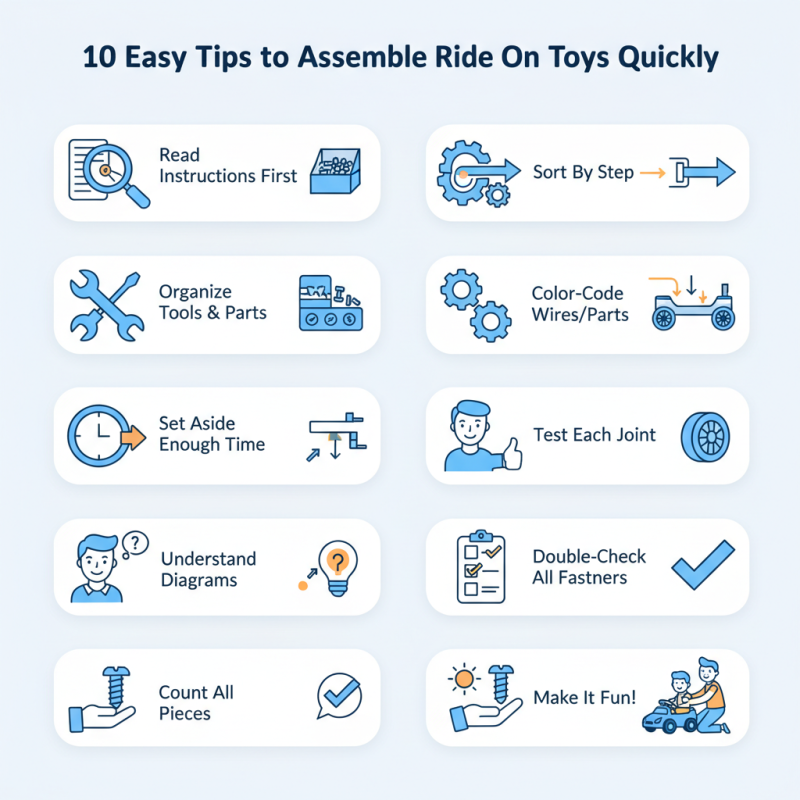
When assembling ride-on toys, selecting the right tools can save you time and frustration. Start with basic tools like a screwdriver and pliers. A socket wrench can also be handy for tightening bolts. Each toy may require different tools, which is why checking the instruction manual beforehand is crucial. This helps prevent confusion and ensures everything is within reach.
Pay attention to the quality of your tools. Worn-out screwdrivers can strip screws, leading to delays. It might be tempting to use whatever is available, but investing in reliable tools pays off. Sometimes, you might discover you lack a specific tool midway through assembly. That can halt progress and require a trip to the store.
Organization is equally important. Lay out parts in a way that makes sense. Missing a small component can mean you’re stuck. Take your time to ensure that each piece is accounted for before you start assembling. Don't rush the process; double-check everything as you go along. Creating a calm environment can help avoid mistakes and missteps.
: Lay out all parts and organize screws and nuts. This helps avoid mistakes.
Check parts for sharp edges and loose screws. Secure assembly prevents accidents.
Look for online tutorials. They can provide helpful visual guidance for tricky steps.
Try the toy yourself. Ensure it operates smoothly and wheels roll freely.
A flat, soft area is ideal. Avoid uneven or hard surfaces like concrete.
Track how long each step takes using a stopwatch to improve efficiency.
It involves working on similar parts across different toys to save time.
Take a moment to breathe and refocus. A clear mind helps prevent errors.
Yes, recognizing past struggles can lead to improvements in future projects.
Small adjustments in technique often lead to significant time savings.
Assembling ride-on toys can be a straightforward task if you follow some essential tips. First, selecting the right tools can greatly simplify the process, ensuring that you have everything on hand to tackle the assembly requirements, which often include understanding common parts and instructions. It's crucial to prioritize safety by securing and stabilizing the toy during assembly, as this guarantees a safe experience for the child.
Additionally, using effective step-by-step assembly techniques can significantly improve efficiency and reduce frustration. Incorporating time management strategies will help you track the duration of the assembly, making it easier to gauge your progress. By following these guidelines, you'll learn how to assemble ride-on toys easily, allowing you to enjoy the process and get your child ready for fun in no time.
