Choosing the right materials for kids' ride-on vehicles is crucial for safety and durability. According to Dr. Lisa Holloway, a renowned child safety expert, "Selecting high-quality materials can significantly reduce risks in children's play." Parents often wonder, "what materials are best for kids ride on vehicles?" This question is fundamental in ensuring a safe and enjoyable experience for young riders.
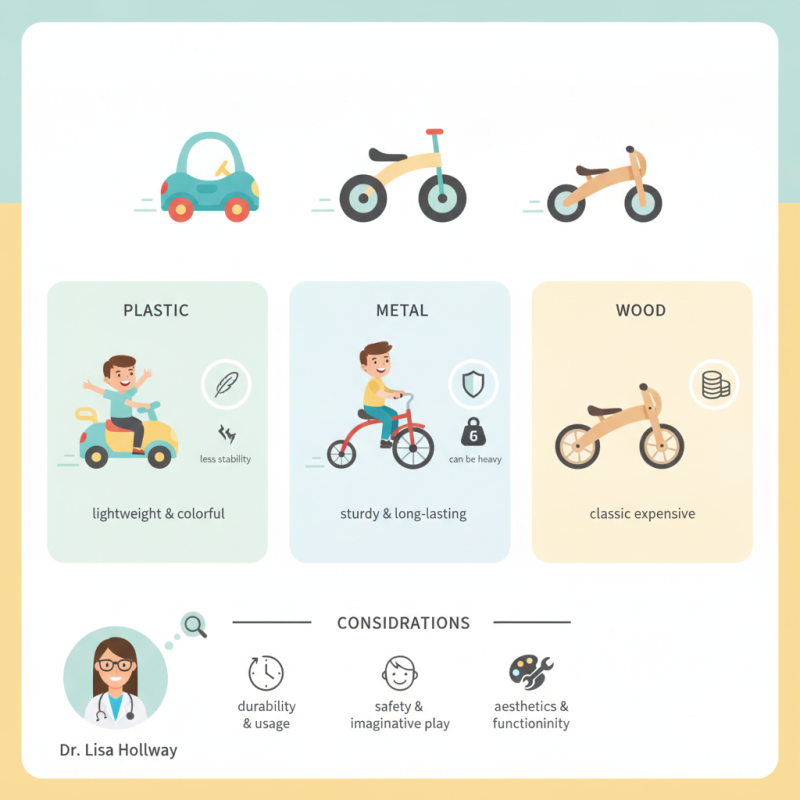
Common materials include plastic, metal, and wood. Each option has its pros and cons. Plastic can be lightweight and colorful, making it attractive. However, it might lack stability. Metal is sturdy and long-lasting but can be heavy for younger kids. Wood offers a classic appeal but may be more expensive. Dr. Holloway advises that understanding these options can help parents make informed choices.
A critical consideration is how these materials impact playtime. Some ride-on vehicles can fade in color or become worn out. Durability can vary with usage. It's essential to think about how often your child will use the vehicle. This choice not only affects safety but also plays a role in nurturing imaginative play. Balancing aesthetics with functionality is a challenge many parents face, and the right materials can make a difference.
Types of Materials Commonly Used in Kids Ride On Vehicles
When it comes to kids' ride-on vehicles, the choice of materials is crucial for safety and durability. Commonly used materials include plastic, metal, and wood. Each material has its benefits and drawbacks. For instance, plastic is lightweight and resistant to weather elements. However, it may not be as sturdy as metal options.
According to industry studies, nearly 30% of parents report concerns about the longevity of plastic ride-ons. In contrast, metal frames provide enhanced stability and weight capacity. They withstand rough outdoor play better. Yet, metal can rust, which poses challenges in wet conditions.
The choice of material can also impact the vehicle's cost. An analysis from toy manufacturing experts indicates that plastic models often average 20% lower in price versus metal counterparts. However, long-term investments in higher-quality materials may yield better value. Concerns around safety and longevity should be at the forefront when making these decisions.
Top Materials for Kids Ride On Vehicles
| Material Type |
Durability |
Weight |
Cost |
Safety Rating |
| Plastic |
Moderate |
Lightweight |
Low |
High |
| Metal |
High |
Heavy |
Moderate |
Good |
| Wood |
High |
Moderate |
High |
Very High |
| Rubber |
Moderate |
Lightweight |
Low |
High |
| EVA Foam |
Low |
Very Light |
Low |
Medium |
Safety Considerations for Each Material in Ride On Vehicles
When it comes to kids' ride-on vehicles, the choice of materials significantly impacts safety. For instance, plastic is a popular option due to its lightweight nature. It is easy to mold and can withstand various weather conditions. However, not all plastics are created equal. Low-quality plastics can crack or bend under pressure, leading to potential injury. According to a study by the Consumer Product Safety Commission, nearly 5,000 injuries related to ride-on toys are reported annually, often due to material failure.
Metal offers enhanced durability and stability, making it safer during rides. Steel frames can absorb impacts, minimizing injury risks. Yet, metal can also increase the vehicle's weight, making it less manageable for younger children. If the vehicle tips, a heavy frame might lead to serious accidents. Research from the American Academy of Pediatrics stresses the importance of balance between sturdiness and ease of use.
Wooden ride-on vehicles provide a more natural aesthetic and solid construction. However, wood must be treated properly to avoid splinters. Regular maintenance is essential to ensure safety. A study indicates that splinters or exposed fasteners contribute to a notable percentage of injuries in younger children. Choosing the right material is crucial, as it affects not just durability but also the overall safety of the riding experience.
Durability and Maintenance of Different Materials
When selecting materials for kids' ride-on vehicles, durability is crucial. Kids can be tough on their toys, so the choice of material makes a big difference. Plastic, metal, and wood are common options. Each material has its pros and cons regarding maintenance.
Plastic ride-ons are lightweight and usually offer vibrant colors. However, they may fade over time and can crack with heavy use. Regular inspection is essential to catch any damage early. Metal options tend to be sturdier, which means they can withstand rough play. Yet, they are also prone to rust if exposed to moisture. Keeping them dry and checking for rust spots is critical.
Wood provides a timeless aesthetic, but it requires more maintenance. Sealing the wood helps resist moisture, but scratches may appear over time. Regular polishing can keep the surface looking good.
**Tips:** Always check for loose parts before playtime. This helps ensure safety and extends the life of the vehicle. Consider storing ride-ons indoors to protect them from weather elements. Lastly, encourage children to be gentle when using their ride-ons to help maintain their condition.
Top Materials for Kids Ride On Vehicles: Durability and Maintenance of Different Materials
Environmental Impact of Materials Used in Kids Ride On Vehicles
The materials used in kids' ride-on vehicles significantly impact the environment. Many common materials, such as plastic, can take hundreds of years to decompose. According to a report by the Environmental Protection Agency, around 30% of plastic waste ends up in landfills. This raises concerns about long-term environmental pollution.
Sustainable options are essential for manufacturers today. Wood is a viable alternative, offering durability and biodegradability. It can be sourced responsibly to minimize deforestation. A study by the Forest Stewardship Council found that responsibly sourced wood can reduce carbon emissions by up to 50%. Metal is another durable choice, with the added benefit of being recyclable, thereby reducing overall waste.
However, many manufacturers still rely on cheaper, less sustainable materials. This choice contributes to a larger carbon footprint. As consumers, it's crucial to demand transparency from companies about their material choices. Educating ourselves on sustainable options can help us make informed decisions, benefiting both our children and the planet.
Cost Comparison of Various Ride On Vehicle Materials
When considering ride-on vehicles for kids, material choice greatly impacts cost and durability.
Plastic, metal, and wood are common materials. Each has its benefits and potential downsides. For example, plastic is lightweight and affordable but may not withstand rough use. Conversely, metal offers strength and longevity but often comes with a higher price tag.
The cost comparison of materials reveals interesting insights. A basic plastic ride-on can cost as little as $50, while a well-crafted wooden version might start at $100. Metal options can even reach $200 or more, reflecting the craftsmanship and resilience required. Parents often weigh these costs against durability and safety. However, it’s essential to consider how kids will use the vehicles. Will they ride gently, or are they likely to bump into things?
There are trade-offs to ponder. A lower-priced plastic vehicle might save money initially but could need replacement sooner. Meanwhile, a sturdy metal ride-on may represent a wise investment if it lasts for years. While prices fluctuate, quality should not be compromised. Choosing the right material is about balancing upfront costs with long-term value.
FAQS
: Common materials include plastic, metal, and wood. Each has unique pros and cons.
Plastic is lightweight and can withstand various weather conditions, making it manageable for kids.
Low-quality plastics can crack or bend, which may lead to injuries while using the vehicle.
Metal frames are durable and can absorb impacts, reducing the risk of injuries during falls.
Metal can increase weight, making it difficult for young children to handle safely.
Regular maintenance is needed to avoid splinters and ensure overall safety during play.
Many materials, especially plastics, take centuries to decompose, contributing to pollution.
Demand transparency about material choices from manufacturers and choose sustainably sourced options.
Yes, metal is recyclable, which reduces waste and minimizes environmental impact over time.
Sustainable options reduce carbon footprints and benefit both children's safety and the planet’s health.
Conclusion
When considering what materials are best for kids ride on vehicles, it's essential to evaluate the types of materials commonly used, such as plastic, metal, and wood. Each material offers unique benefits and challenges, from safety features to the durability of the ride on vehicles. Safety considerations play a crucial role, as certain materials may pose risks, such as sharp edges or toxic substances, while others provide better cushioning and protection.
Durability and maintenance are also key factors in choosing the right material, as some options require more upkeep than others. Furthermore, it's important to consider the environmental impact of these materials, as sustainability becomes increasingly relevant in today's market. A cost comparison highlights the financial implications of different materials, aiding parents in making informed decisions that balance quality, safety, and budget. Overall, understanding these aspects can guide parents in selecting the best ride on vehicles for their children.
 KTG Car
