KTG Car KTG Car

Why Improving Kids Outdoor Play Experience Matters?

Time:2026-10-07 Author:Sophia
0%

Improving children’s outdoor play experience matters because play shapes their bodies, confidence, curiosity, and relationships. A muddy path can become a science lesson. A low climbing frame can teach balance, judgment, and persistence. Fresh air alone is not enough. The environment must invite children to move, explore, create, and make age-appropriate choices.

Developmental psychologist Dr. Mariana Brussoni, a leading researcher on children’s outdoor play, explains, “Risky play is thrilling and exciting forms of play that involve uncertainty and a risk of physical injury.” Her work encourages adults to manage hazards without removing every challenge. This distinction is important. A safe space is not always a risk-free space. Children need attentive supervision, clear boundaries, and opportunities to test their abilities.

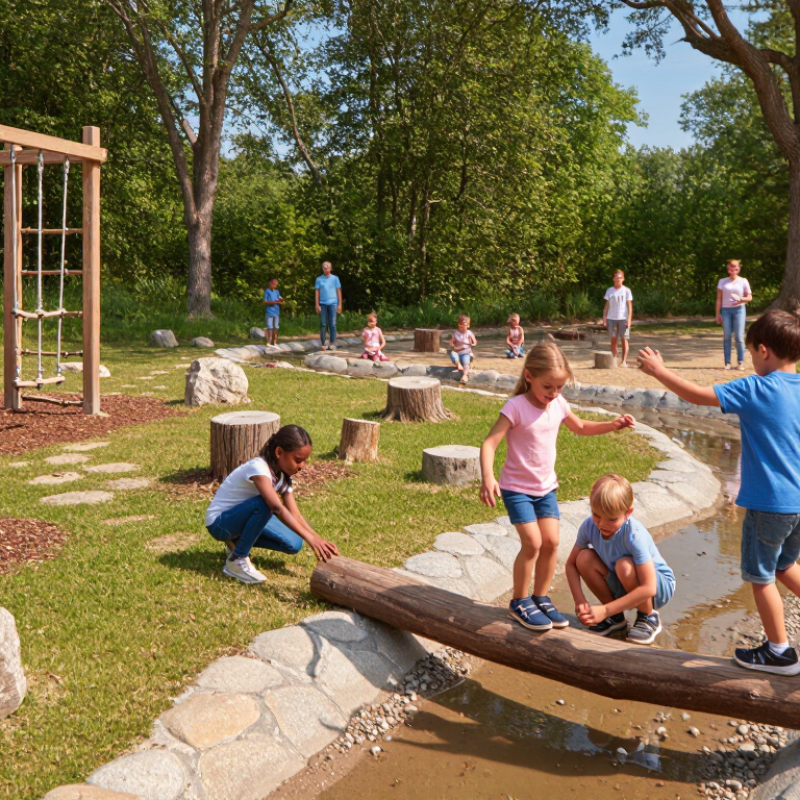
This introduction explores how to improve kids outdoor play experience through thoughtful design and practical adult support. Shade, natural materials, loose parts, and varied surfaces can make a play area more engaging. A log, sand patch, or shallow water channel may offer more possibilities than brightly colored equipment alone. Children also need time without constant instructions. Let them lead.

There is no perfect playground. Weather changes. Some children hesitate. Others rush toward every challenge. Families, educators, and designers must observe, adjust, and reflect. A climbing feature may be exciting for one child but overwhelming for another. Improvement begins with listening to children and noticing what happens after the first invitation to play.
Why Improving Kids Outdoor Play Experience Matters?

What Outdoor Play Experience Means for Children

Outdoor play experience means more than spending time outside. It includes what children can see, touch, choose, and safely attempt. A child digging damp soil, balancing on a log, or chasing a friend practices movement and judgment together. That small choice matters.

The World Health Organization’s 2020 guidelines recommend at least 180 minutes of physical activity daily for children aged three to four. At least 60 minutes should reach moderate-to-vigorous intensity. Yet WHO reported that 81% of adolescents aged 11–17 were insufficiently active in 2016. These figures do not prove that outdoor play alone solves inactivity. They do show why daily environments deserve careful attention. The American Academy of Pediatrics also links play with language, self-regulation, social skills, and executive function.

A useful outdoor space offers shade, varied surfaces, manageable risks, and room for quiet discovery. A child should be able to pause under a tree, then run across open ground. Adults can supervise without directing every movement. This balance is difficult. Too much protection can remove challenge; too little can create fear. More equipment is not always better. A plain garden may invite richer play than a crowded structure. However, some children face poor access, unsafe streets, disability barriers, or weather limitations. Improving the experience means noticing those realities, not assuming one playground fits everyone.

Why Improving Kids' Outdoor Play Experience Matters

Outdoor play gives children opportunities to move, explore, solve problems, cooperate with others, and build confidence. For children and adolescents aged 5–17, the World Health Organization recommends at least 60 minutes of moderate-to-vigorous physical activity every day, including vigorous, muscle-strengthening, and bone-strengthening activities on at least 3 days per week.

WHO activity benchmarks for children and adolescents aged 5–17. Outdoor play can help make daily movement enjoyable and provide natural opportunities for running, jumping, climbing, balancing, and social interaction.

Source: World Health Organization, Guidelines on Physical Activity and Sedentary Behaviour, 2020.

How Outdoor Play Supports Physical and Mental Development

Why Improving Kids Outdoor Play Experience Matters?

Outdoor play supports children’s bodies and minds in practical, visible ways. Running across grass strengthens muscles, balance, and coordination. Climbing encourages safe risk assessment and problem-solving. Even a short walk can improve stamina and sleep quality. Child-development research also links active outdoor time with better attention and emotional regulation.

The mental benefits often appear in small moments. A child may pause beside a puddle, invent a game, or negotiate rules with friends. These experiences build creativity, communication, and confidence without constant adult direction. Natural light and open space can also reduce tension after a busy school day. I have noticed that children sometimes return calmer, but not every outdoor session works perfectly. Weather, tiredness, or arguments can change the experience quickly.

Tips: Offer loose materials such as sticks, leaves, chalk, or cardboard. Let children choose between exploring, building, and moving. Keep play areas reasonably safe, while allowing manageable challenges. Ask, “What could you try next?” instead of correcting every mistake. Bring water and suitable clothing. A five-minute outdoor game still counts. Pay attention to quieter children, too; they may need time before joining. Evaluate the space regularly, because a fun area can become boring or unsuitable as children grow.

Which Outdoor Features Encourage Active and Creative Play

Why Improving Kids’ Outdoor Play Experience Matters

Which Outdoor Features Encourage Active and Creative Play

A useful outdoor space invites children to move without making movement feel like exercise. Open grass supports running, chasing, and simple ball games. Low climbing structures build balance, grip strength, and confidence. Paths with gentle curves encourage children to explore instead of following one fixed route. Active bodies need varied challenges.

Creative play needs more than bright equipment. Loose natural materials, such as sticks, stones, sand, and leaves, can become bridges, shops, or imaginary animals. A shaded corner gives children space to draw, talk, or invent quiet games. Logs and small platforms also support storytelling while developing coordination. Simple features often create richer play.

Safety still matters. Equipment should match children’s ages, remain stable, and use surfaces that reduce injury risks. Caregivers can check for sharp edges, broken parts, standing water, and excessive heat. From observing children at play, I have noticed that adults sometimes add too many rules. That can limit experimentation. I once assumed a highly organized playground would encourage better play, but children preferred a messy area with movable materials. The design was not perfect. Some children still needed clearer boundaries and more accessible routes. Their reactions showed why outdoor spaces should be observed, adjusted, and tested with real children over time.

How Safe, Inclusive Spaces Improve Children’s Outdoor Experiences

Why Improving Kids Outdoor Play Experience Matters?

How Safe, Inclusive Spaces Improve Children’s Outdoor Experiences

A good outdoor space gives children room to move, imagine, and connect. Safety begins with clear sightlines, stable surfaces, shaded areas, and equipment suited to different ages. Adults should inspect loose bolts, sharp edges, slippery patches, and crowded pathways regularly. Small hazards can change a child’s whole experience.

Inclusion requires more than adding one accessible feature. Children need varied choices, including quiet corners, wide routes, sensory textures, and play structures with different challenge levels. A child using mobility equipment should reach meaningful play, not merely watch nearby. Simple signs, gentle transitions, and comfortable seating can also support children with sensory or communication needs. Every child deserves real participation.

Practical observation matters. Watch how children enter, wait, avoid, cooperate, and leave the space. Their behavior often reveals problems that a checklist misses. A crowded entrance may discourage some children. Loud surfaces may overwhelm others. No design is perfect. I have seen well-planned areas fail because adults assumed every child wanted the same challenge. Feedback from children, families, teachers, and maintenance staff can expose those gaps. Reviewing the space after rain, during busy hours, and across seasons makes improvements more reliable. Safe, inclusive play is not a finished product. It changes as children grow and communities learn.

Ways Families and Communities Can Enhance Outdoor Play Opportunities

Why Improving Kids’ Outdoor Play Experience Matters?

Ways Families and Communities Can Enhance Outdoor Play Opportunities

Outdoor play becomes richer when families and communities design it around children, not convenience. Families can begin with small, repeatable changes. Walk to a nearby green space, carry a ball, and allow extra time for exploring. Let children choose between climbing, collecting leaves, or inventing a game. Open-ended play supports movement, creativity, and social problem-solving. Caregivers should watch without directing every action. That observation reveals what children actually enjoy. Adults sometimes over-structure play. That deserves reflection.

Communities can make outdoor spaces safer, more welcoming, and easier to reach. Local councils, schools, and resident groups can inspect playgrounds regularly. A useful play area needs shade, drinking water, seating, and accessible paths. Clear paths help children with mobility differences participate beside their friends. Shared lending boxes can provide balls, skipping ropes, and simple nature guides. Residents can organize supervised play hours near apartment buildings or community centers. However, some projects focus on equipment instead of children’s daily needs. Listening to families may reveal missing toilets, poor lighting, or unsafe crossings.

Reliable outdoor opportunities also require practical safety habits. Families should check weather, traffic, surface conditions, and supervision needs before play begins. Adults need clear boundaries, but children still need reasonable freedom. Children with sensory or physical needs may benefit from quieter areas and predictable routes. Professional guidance can help families adapt activities without limiting independence. Yet safety should not remove every challenge. Rain, boredom, and small disagreements can teach useful skills when adults respond calmly. A muddy shoe or a failed game may become part of the learning.

FAQS

What does outdoor play experience mean for children?

It involves seeing, touching, choosing, moving, and safely testing ideas outside. Digging wet soil builds strength and judgment. Small choices matter.

How much daily physical activity do young children need?

Guidance recommends 180 minutes daily for children aged three to four. At least 60 minutes should involve moderate-to-vigorous movement. Outdoor play can help, but it cannot solve inactivity alone.

Which features make an outdoor space safer?

Clear sightlines, stable ground, shade, and age-suitable equipment support safer play. Adults should check loose bolts, sharp edges, slippery areas, and blocked paths. Tiny hazards matter.

Why should outdoor spaces include different challenge levels?

Children need choices that match their abilities, confidence, and interests. One child may climb while another prefers balancing on a low log. The same challenge does not suit everyone.

How can an outdoor area become more inclusive?

Provide wide routes, quiet corners, varied textures, comfortable seating, and meaningful accessible play. A child using mobility equipment should participate, not merely watch. Access must feel real.

Should adults direct children during outdoor play?

Adults should supervise without controlling every movement. They can notice hazards while allowing children to choose reasonable challenges. Too much protection can remove useful learning.

Why is observing children important when improving a play area?

Watching entry, waiting, cooperation, avoidance, and departure reveals problems checklists may miss. A crowded gate may discourage some children. Loud surfaces may overwhelm others.

Does adding more equipment always improve outdoor play?

No. A plain garden may encourage richer imagination than a crowded structure. Space for running, pausing, and exploring can matter more than quantity. More is not always better.

How often should an outdoor space be reviewed?

Review it during busy hours, after rain, and across different seasons. Children’s needs change as they grow. No design works perfectly.

Conclusion

Outdoor play is more than simply spending time outside; it gives children opportunities to move, explore, imagine, and connect with others. Through running, climbing, balancing, and active games, children can build strength, coordination, confidence, and healthy habits. Outdoor environments also support mental development by encouraging curiosity, problem-solving, emotional expression, and independence. Natural materials, open spaces, loose parts, and age-appropriate challenges can inspire both creative play and physical activity.

To understand how to improve kids outdoor play experience, families and communities should create spaces that are safe, welcoming, and accessible to children with different abilities and interests. Clear boundaries, suitable equipment, shade, comfortable surfaces, and regular maintenance help children play with confidence. Adults can further enhance outdoor opportunities by joining games, encouraging exploration without controlling every action, and organizing affordable activities in parks, schoolyards, or shared community areas. With thoughtful design and positive support, outdoor play can become a joyful and meaningful part of children’s everyday development.

Sophia

Sophia

Sophia is a dedicated marketing professional with an exceptional depth of knowledge about her company's products and services. With a keen understanding of market trends and customer needs, she crafts insightful blog posts that not only inform but also engage readers, enriching the company’s online......