KTG Car KTG Car

7 Tips Why Do Kids Love Ride On Cars?

Time:2026-10-02 Author:Mason
0%

Why do kids love ride on cars? The answer is more layered than simple excitement. A small electric vehicle gives children movement, choice, and a convincing sense of independence. They press a pedal, turn a wheel, and watch the car respond. That immediate connection feels powerful, especially when they are still learning control. The living room becomes a road. The garden becomes an adventure.

Dr. Amanda Gummer, a child-development and play specialist, says, “Play is the way children learn about the world.” Her observation helps explain the appeal of ride-on cars. Children are not only pretending to drive. They are practicing direction, distance, balance, and decision-making through play. They may carry a teddy bear, stop beside a flowerpot, or create a delivery route across the patio. These tiny missions make ordinary movement feel meaningful.

There is also a social reason. One child drives while another gives directions. Siblings negotiate turns, even when the negotiation gets messy. That part should not be romanticized. Some children may focus only on speed, while others may feel nervous or excluded. Adult guidance still matters, particularly around safe surfaces, battery use, and age-appropriate controls. A ride-on car cannot replace active supervision or open-ended outdoor play.

This article explores seven practical reasons behind the fascination. It considers imagination, independence, sensory feedback, family interaction, and physical coordination. It also questions a common assumption: bigger, faster, and louder do not always mean better. The best experience may be slower, simpler, and shaped around the child’s confidence.
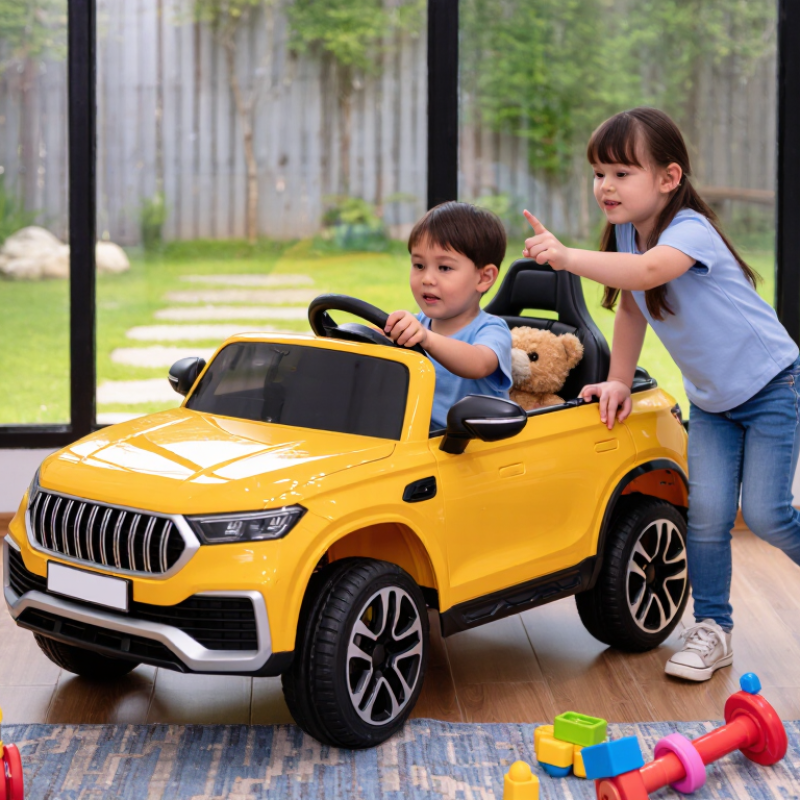
7 Tips Why Do Kids Love Ride On Cars?

What Ride-On Cars Are and How They Work

7 Tips Why Do Kids Love Ride-On Cars?

Ride-on cars are small electric vehicles designed for children to sit inside and control. Most use a rechargeable battery, low-voltage motor, gearbox, wheels, steering wheel, and foot pedal. When a child presses the pedal, electricity reaches the motor and turns the wheels through the gearbox. The car usually moves slowly, helping children practice simple coordination. Some models also include a parent remote control, allowing an adult to stop or guide the vehicle when needed. That feature matters more than flashy lights.

Children enjoy these cars because they imitate adult driving. A steering wheel feels important in small hands. Buttons, mirrors, doors, and gentle engine sounds make pretend play feel real. Movement adds excitement, while the seat gives children a sense of independence. They can choose a direction, pause near a tree, or carry a small toy in the storage area. It feels like an adventure.

I once assumed speed created the most fun. That assumption was too simple. Children often prefer control, sound, and personal space. However, ride-on cars are not harmless furniture. Adults should check the battery, tires, pedals, and steering before every session. Use them on flat, private ground away from traffic, stairs, ponds, and steep slopes. A properly fitted helmet is sensible, even at low speed. Follow the vehicle’s age and weight guidance carefully. Children may look confident before they can judge distance or danger. That gap deserves attention.

How Ride-On Cars Support Imaginative Play

7 Tips Why Do Kids Love Ride On Cars?

How Ride-On Cars Support Imaginative Play

A ride-on car turns ordinary space into a story world. The driveway becomes a rescue route, a supermarket, or a lunar runway. Children choose the destination, assign roles, and solve small problems while moving. This control makes pretend play feel real. It also encourages language, planning, and flexible thinking. The American Academy of Pediatrics describes play as essential for healthy brain development in its 2018 clinical report, The Power of Play.

The strongest value is not speed. It is the open-ended story around the vehicle. One child may become a driver, while another acts as a mechanic or passenger. The CDC’s 2022 developmental milestones note that most five-year-olds follow rules and take turns during games. Ride-on play can offer natural practice, although adults should not force every session into a lesson. Children sometimes ignore the planned adventure. That is normal.

Movement still matters. WHO guidelines recommend at least 180 minutes of physical activity daily for children aged three to four, including 60 minutes of moderate-to-vigorous activity. A powered ride-on car may not provide enough active movement alone, so combine it with walking, pushing, obstacle routes, and outdoor games. Supervised play, age-appropriate speed, and clear boundaries protect the experience. The evidence is promising, but not perfect. A ride-on car can support imagination; it cannot replace responsive adults, creative materials, or unstructured time.

Why Driving Builds Children’s Confidence and Independence

Children often love ride-on cars because they offer more than movement. A child holds the wheel, chooses a direction, and watches the car respond. These small decisions can strengthen confidence and independence. The experience feels real, even at a gentle speed.

Tip 1: Let children make simple choices. They might select the driveway route, carry a soft toy, or decide when to stop. Adults should stay nearby, check the surface, and set clear boundaries. A short ride can become a practical lesson in attention and responsibility. Keep it predictable.

Tip 2: Praise careful actions, not just driving skill. Say, “You stopped before the gate,” instead of calling the child a perfect driver. Specific feedback helps children understand what they did well. It also reduces pressure to drive faster or impress others. Safety guidance should match the child’s age, ability, and surroundings.

Tip 3: Give children time to solve small problems. If the car turns awkwardly, pause before helping. Ask, “What could you try?” They may adjust the wheel or reverse slowly. This supports problem-solving and persistence. Still, independence has limits. Young children can misjudge distance, especially near slopes, vehicles, or crowded spaces. An adult must remain actively involved.

The result is not always smooth. Some children become frustrated or lose interest quickly. That is normal. Confidence grows through repeated, manageable attempts, not constant success.

7 Tips: Why Do Kids Love Ride-On Cars? — Why Driving Builds Children’s Confidence and Independence

Tip Developmental Dimension What Children Practise Confidence and Independence Benefit Observable Signs Helpful Adult Support
1Offer Controlled Choice Autonomy and decision-making Choosing a direction, stopping, starting, and deciding where to travel in a safe area Small choices help children feel that their actions have a meaningful result without removing adult guidance. The child chooses between safe routes, asks to try again, and begins to make simple plans. Provide two or three safe options and allow the child time to make a choice instead of directing every movement.
2Build Skills Gradually Motor coordination and self-regulation Using steering, pedals, buttons, or a remote-control system while adjusting speed and direction Progressive practice turns a challenging task into manageable steps, supporting persistence and realistic self-belief. The child maintains direction for longer, corrects mistakes, and shows less frustration during practice. Start in a flat, open space and introduce one skill at a time, such as steering before navigating around objects.
3Use Pretend Play Imagination, language, and executive function Creating driving roles, following a pretend destination, remembering rules, and adapting the story Pretend scenarios give children a low-pressure way to practise planning, flexible thinking, and communication. The child invents routes, explains the game, changes plans, and uses new vocabulary related to travel and safety. Ask open-ended questions such as “Where are we going?” or “What should we do before we move?”
4Celebrate Effort, Not Speed Growth mindset and emotional resilience Repeating a task, managing mistakes, and noticing improvement over time Focusing on effort helps children connect confidence with practice rather than with winning or being the fastest. The child tries a different approach after a mistake and accepts constructive guidance more easily. Use specific feedback, such as “You kept steering carefully,” instead of comparing the child with others.
5Practise Simple Safety Rules Responsibility and risk awareness Stopping at boundaries, checking for people, staying away from roads, and listening for instructions Consistent safety routines help children understand that independence includes making careful choices. The child stops when asked, waits before moving, and remembers familiar boundaries without repeated reminders. Use short, consistent rules and demonstrate them every time. Adult supervision remains essential.
6Include Cooperative Driving Social development and communication Taking turns, negotiating routes, following shared rules, and responding to another child’s signals Shared play links personal control with social responsibility and helps children practise respectful independence. The child waits for a turn, communicates intentions, and adjusts behaviour to keep play enjoyable for others. Set clear turn-taking rules and use cooperative goals, such as completing a delivery route together.
7Match the Activity to the Child Individual readiness and successful challenge Using a ride-on activity that matches the child’s coordination, attention, size, and understanding of rules An appropriate challenge reduces unnecessary frustration and gives the child a realistic opportunity to experience competence. The child can follow the basic instructions, control the vehicle safely, and remain engaged without becoming overwhelmed. Follow the product’s age and weight guidance, inspect the vehicle before use, and increase difficulty only when safe control is consistent.
Safety reminder: Ride-on cars can support play-based learning, but they do not automatically improve confidence or independence. Use them only in a controlled area away from traffic, stairs, pools, and other hazards. Follow the vehicle’s instructions, use required protective equipment, and provide close adult supervision appropriate to the child’s age and abilities.
Evidence-informed principles are consistent with guidance on play, child development, motor learning, and injury prevention from Harvard Center on the Developing Child, child developmental milestone guidance, and toy safety recommendations.

How Ride-On Cars Encourage Movement and Coordination

Why Do Kids Love Ride-On Cars? How Ride-On Cars Encourage Movement and Coordination

Kids love ride-on cars because movement feels like play, not exercise. A child pushes with both feet, grips the wheel, and watches the vehicle respond. These small actions build body awareness. Turning also asks children to judge distance, direction, and speed.

The World Health Organization recommends at least 180 minutes of physical activity daily for children aged three to four. It also recommends 60 minutes of energetic activity. A ride-on car cannot meet that target alone. Still, repeated trips across a safe floor can add useful active minutes. The American Physical Activity Guidelines also encourage children and teenagers to move for at least 60 minutes each day. Every movement counts.

Coordination develops through practice. A child may push too hard, drift toward a wall, then correct the steering. That messy moment matters. It combines balance, leg strength, visual tracking, and timing. Battery-powered models may offer less physical effort, so adults should not assume every ride creates exercise. Choose supervised play on a clear, level surface. Short sessions work well. Watch the feet and hands. Offer simple challenges, such as reaching a cushion or following a chalk path. The evidence supports active play, but ride-on cars are not a magic developmental tool. Their value depends on how children use them.

Why Do Kids Love Ride-On Cars?

How ride-on play can encourage movement and coordination

Ride-on cars can make active play enjoyable by encouraging children to push, pedal, steer, stop, and change direction. These actions may support gross-motor movement, balance, spatial awareness, and hand-foot coordination. The chart places this type of play in the context of international daily physical-activity guidance.

Reference: World Health Organization, Guidelines on Physical Activity, Sedentary Behaviour and Sleep for Children Under 5 Years of Age and Children and Adolescents 5–17 Years.

What Safety Features Make Ride-On Cars Enjoyable for Kids

7 Tips Why Do Kids Love Ride On Cars?

Children enjoy ride-on cars because they feel independent without losing adult guidance. Safety features make that freedom calmer and more exciting. A low-speed setting helps beginners learn steering gradually. Soft-start acceleration prevents sudden jolts near walls or furniture. A responsive foot pedal also gives children simple control.

A secure seat belt keeps the child positioned during turns and small bumps. Wide wheels and a low center of gravity reduce the chance of tipping on flat ground. Parents should check the recommended age and weight limits before every ride. An emergency stop button is valuable when a child becomes distracted. It should be easy for an adult to reach.

Good visibility matters too. Bright reflectors, working lights, and quiet surroundings help adults monitor movement.

Battery protection and a covered charging port reduce avoidable electrical risks. Adults should inspect loose screws, damaged cables, and worn tires regularly. A safety feature cannot replace supervision. That is easy to forget during a busy afternoon.

In practical use, children may still press the accelerator while turning, so open, level surfaces are safer. Helmets are sensible for some outdoor conditions, although they do not correct poor driving habits.

The safest ride is not always the fastest one. Sometimes, a slower setting makes the game last longer and the child laugh more.

FAQS

What is a ride-on car, and how does it move?

It is a small electric vehicle made for children to sit inside. A rechargeable battery powers a low-voltage motor. Pressing the pedal sends electricity to the motor. The gearbox turns the wheels slowly.

Why do children enjoy ride-on cars?

Children can imitate adult driving. A steering wheel feels important in small hands. Doors, mirrors, buttons, and gentle sounds support pretend play. Movement makes the experience feel like an adventure.

Can ride-on cars build confidence and independence?

They can support small decisions. Children choose directions, pause near a tree, or carry a soft toy. Adults should praise careful actions, such as stopping before a gate. Confidence grows through manageable practice, not constant success.

How can adults encourage problem-solving during rides?

Pause when the car turns awkwardly. Ask what the child could try. The child might adjust the wheel or reverse slowly. Help when danger appears. Independence has limits.

Do ride-on cars provide useful physical activity?

They can add active minutes through steering, walking, and repeated movement. However, battery-powered driving may require little physical effort. A ride-on car cannot replace daily active play. That distinction matters.

How do ride-on cars support coordination?

Children grip the wheel, watch their path, and adjust direction. They may push too hard, approach a wall, then correct the steering. This combines timing, visual tracking, balance, and leg movement. Messy practice still matters.

Where should children use ride-on cars?

Use them on clear, flat, private ground. Keep them away from traffic, stairs, ponds, steep slopes, and crowded spaces. A chalk path or cushion can create a simple challenge. The surface matters more than decorations.

What safety checks should adults make before each ride?

Check the battery, tires, pedals, steering, and seat position. Follow the stated age and weight guidance. A fitted helmet is sensible, even at low speed. If available, an adult should keep the remote control nearby.

Why is adult supervision still necessary?

Children may look confident before judging distance or danger accurately. An adult should stay close and set clear boundaries. Watch the child’s hands and feet. I once thought low speed meant low risk, but that was too simple.

Conclusion

Ride-on cars are child-sized vehicles powered by a small battery or operated with simple foot controls, allowing children to steer, stop, and move at a comfortable pace. But why do kids love ride on cars? These vehicles turn ordinary play into an exciting adventure, giving children the chance to pretend they are drivers, explorers, or helpers on a special mission. Imaginative play encourages storytelling and helps children express their ideas in a fun, hands-on way.

Driving a ride-on car can also build confidence and independence as children make choices, practice steering, and learn to control their movement. The activity supports physical development by improving coordination, balance, spatial awareness, and gentle motor skills. At the same time, features such as stable construction, manageable speed, easy controls, secure seating, and reliable stopping systems help make play both enjoyable and reassuring. With proper supervision and a suitable play area, ride-on cars offer an engaging way for children to move, imagine, and grow.

Mason

Mason

Mason is a seasoned marketing professional with a deep expertise in the company's offerings and a passion for driving brand awareness. With a strong background in digital marketing strategies, he has an innate ability to connect with diverse audiences and effectively communicate product benefits.......